July 3, 2026 | Ivana Gájová Kopecká | Thematic Workshop on Peer Review Fieldwork
#PeerReview #CapacityBuilding #EUROSAI #StrategicGoal2 #INTOSAI #SAISlovakia #SAIPoland #SupremeAuditInstitutions #CapacityBuilding #PublicAudit #GoodGovernance #Transparency #ProfessionalDevelopment #Collaboration
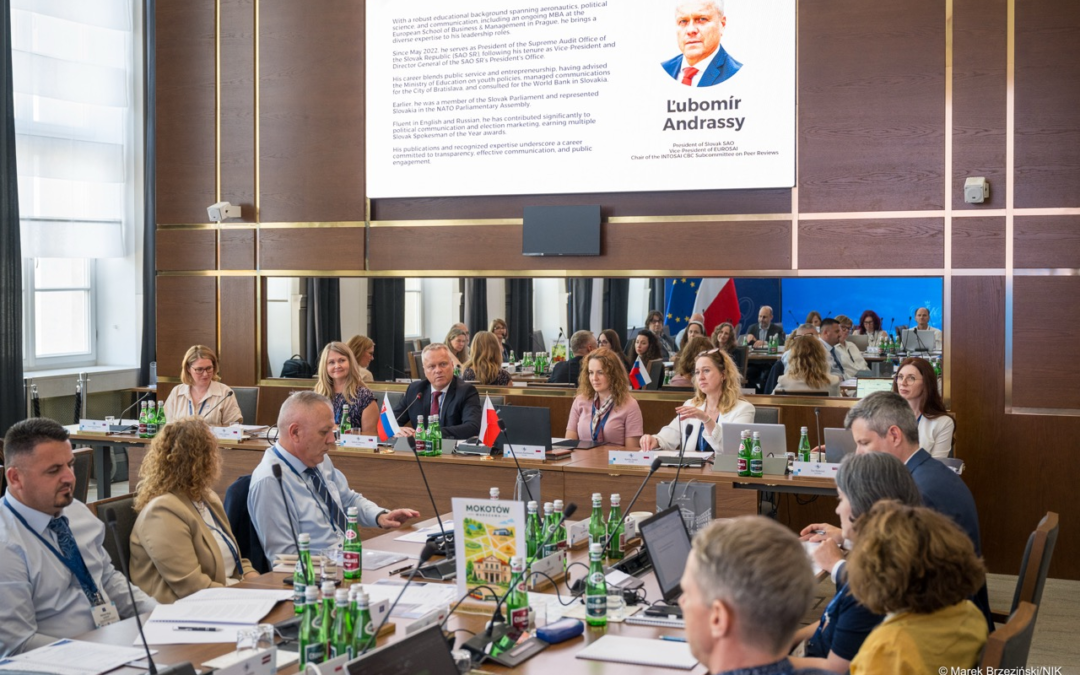
On 29–30 June 2026 the Chair of the INTOSAI Capacity Building Committee – Subcommittee on Peer Reviews (the Supreme Audit Office of the Slovak Republic – NKÚ), and the Supreme Audit Office (NIK) of Poland, co-leader of EUROSAI Strategic Goal 2 – Institutional Capacity Development, jointly organised a workshop on peer reviews in an effort to promote its strategic goal of regional outreach.
The first in-person joint Thematic Workshop on Peer Review Fieldwork brought together participants from across the EUROSAI community to exchange experiences, discuss challenges and promote benefits of peer review as a unique instrument of independent assessment conducted by peers. Through a combination of expert discussions, practical exercises and valuable networking opportunities, participants and speakers from SAIs – Albania, Austria, Bulgaria, France, Hungary, Israel, Kosovo, Latvia, Malta, Poland, Portugal, Slovakia, Sweden and UK explored the key elements that contribute to a successful peer review process.
The programme focused on every stage of the peer review journey, from careful planning and stakeholder engagement to fieldwork (including effective data management), reporting and follow-up activities. Participants also discussed the future of peer reviewing. By sharing experiences, challenges and lessons learned, participants gained practical insights into how peer reviews can be conducted effectively and deliver meaningful results.
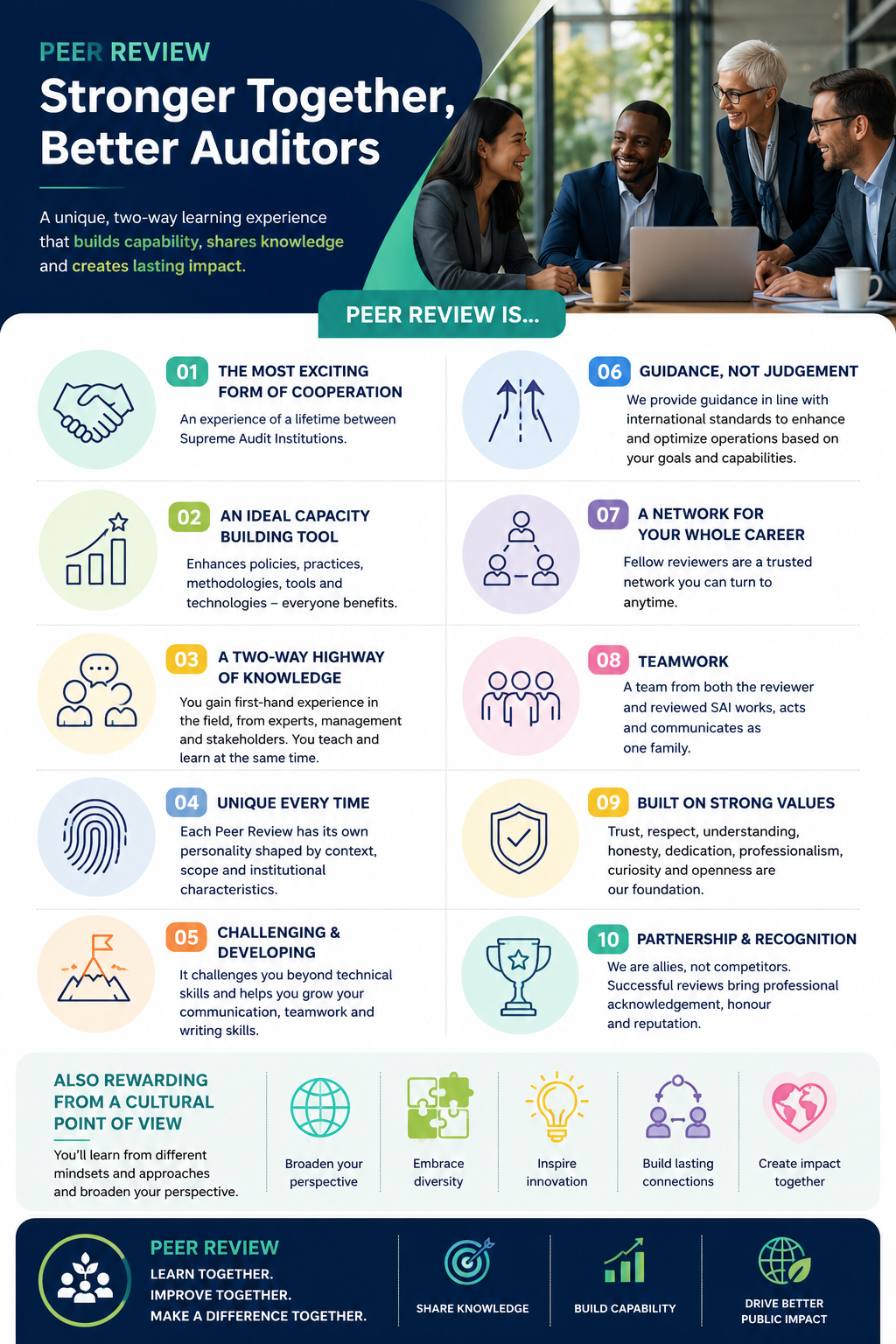
The exchanges highlighted peer review as a powerful tool for knowledge sharing and institutional capacity building. Beyond being just an independent assessment, peer reviews create opportunities for SAIs to strengthen their capacities and foster a culture of continuous improvement. The collaborative nature of the process enables institutions to benefit from the expertise and perspectives of their peers while identifying practical solutions to common challenges.
The quality and depth of the discussions provided a base for building a stronger international peer review community and its shared commitment to professional excellence. Participants demonstrated a strong willingness to support one another through open dialogue and the exchange of good practices. This spirit of cooperation remains at the heart of successful peer reviews and contributes significantly to the ongoing improvement of public sector auditing.
Looking ahead, the Subcommittee on Peer Reviews remains committed to fostering an inclusive and supportive peer review community built on trust, cooperation and mutual respect. By working together, peer reviewers are strengthening institutions, developing their own professional expertise as well transferring their knowledge to future reviewers. Through continued collaboration and shared learning, the peer review community will remain a driving force for improvement and accountability across Supreme Audit Institutions worldwide.