

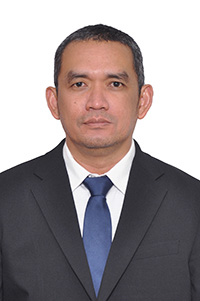
Teguh Widodo
For the Audit Board of the Republic of Indonesia (BPK), improvement has never been a one-time project. It is a journey shaped by challenges, milestones, and the willingness to learn from others. Along the way, INTOSAI’s tools have been our compass.
Our first step came in 2004. Indonesia had just introduced new state finance and audit laws, and BPK was beginning a major modernization program. At that moment, we invited the SAI of New Zealand to conduct our very first peer review. The review gave us a strong foundation to pursue audit standards, methodologies, and a framework for quality assurance. Far from being a mere compliance exercise, it set the tone for what would become a recurring practice of external reflection.
The years that followed brought new chapters. In 2009, SAI Netherlands helped us refine our quality control and training systems. By 2014, a peer review by SAI Poland encouraged us to think differently about governance, independence, and staff rotation, seeing them not only as structures but also as ways to balance institutional needs with people’s development.
In 2012, in between these reviews, we turned to IntoSAINT. This self-assessment urged us to look inward, to examine how the organization manages integrity risks. It was a reminder that credibility depends not just on technical standards, but also on ethical culture.
By 2019, the peer reviews became broader. A joint peer review by SAIs of Poland, Norway, and Estonia was inspired by the SAI Performance Measurement Framework (SAI PMF). Around the same time, we began conducting our own SAI PMF self-assessments, first in 2019, then again in 2022. These assessments allowed us to benchmark our performance, integrate findings into our strategic plan, and train staff to apply the framework in their daily work.
The most recent chapter came in 2024, when SAIs of Germany, Austria, and Switzerland supported us in reviewing three strategic areas: human resources, ethics, and IT systems. Their recommendations are now guiding us to strengthen its human resources management, integrity management, and digital infrastructure.
Looking back, each assessment has played its part. IntoSAINT sharpened our integrity systems, SAI PMF gave us structured reflection, and peer reviews offered honest, external insights. These instruments have helped us to be more credible, resilient, and responsive to stakeholders. At BPK, every recommendation is woven into our five-year strategic plan, monitored carefully, and translated into reforms. In that way, the peer review reports become more than documents, yet they also become turning points.
As INTOSAI reminds us, experientia mutua omnibus prodest, or “mutual experience benefits all,” which we have found to be true. Through these tools, we have not only refined our own institution but also contributed to a broader exchange of learning among SAIs worldwide.