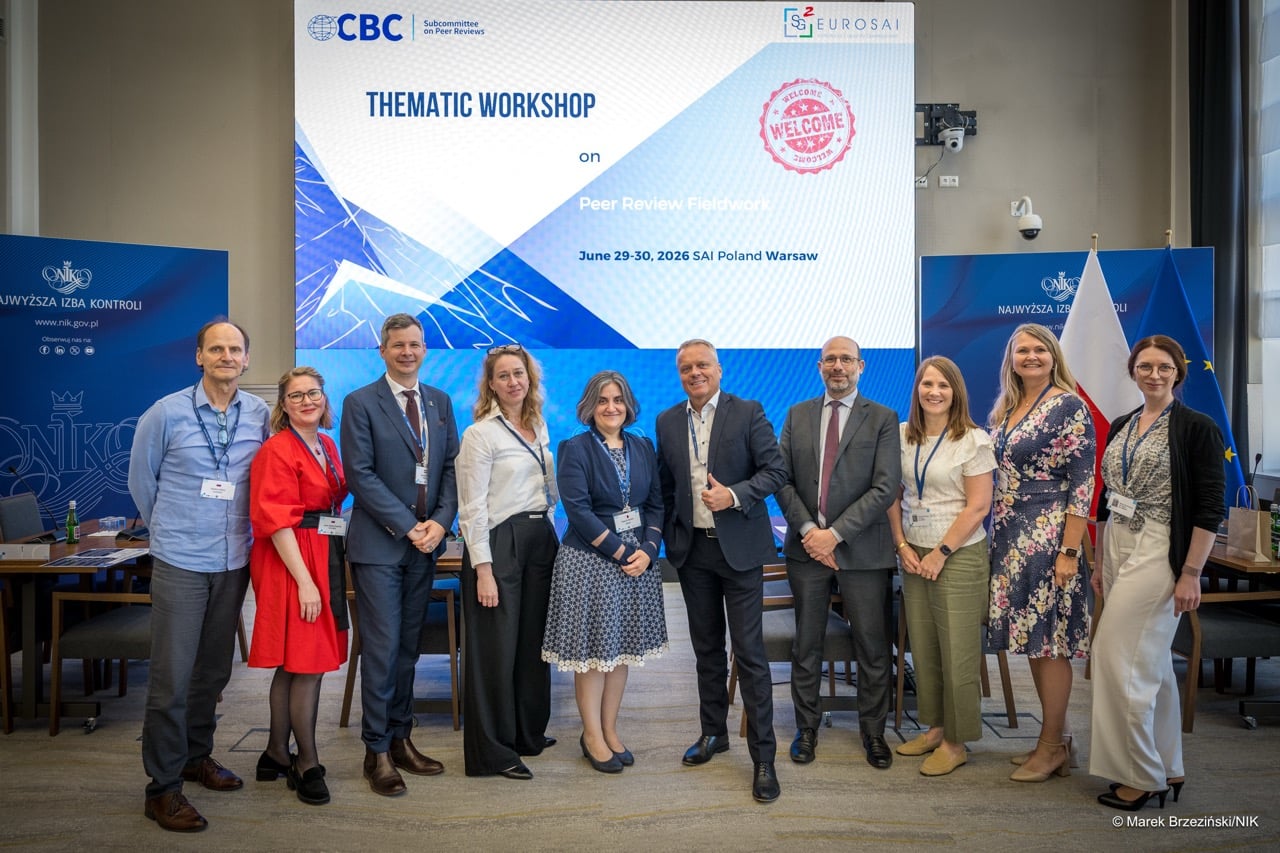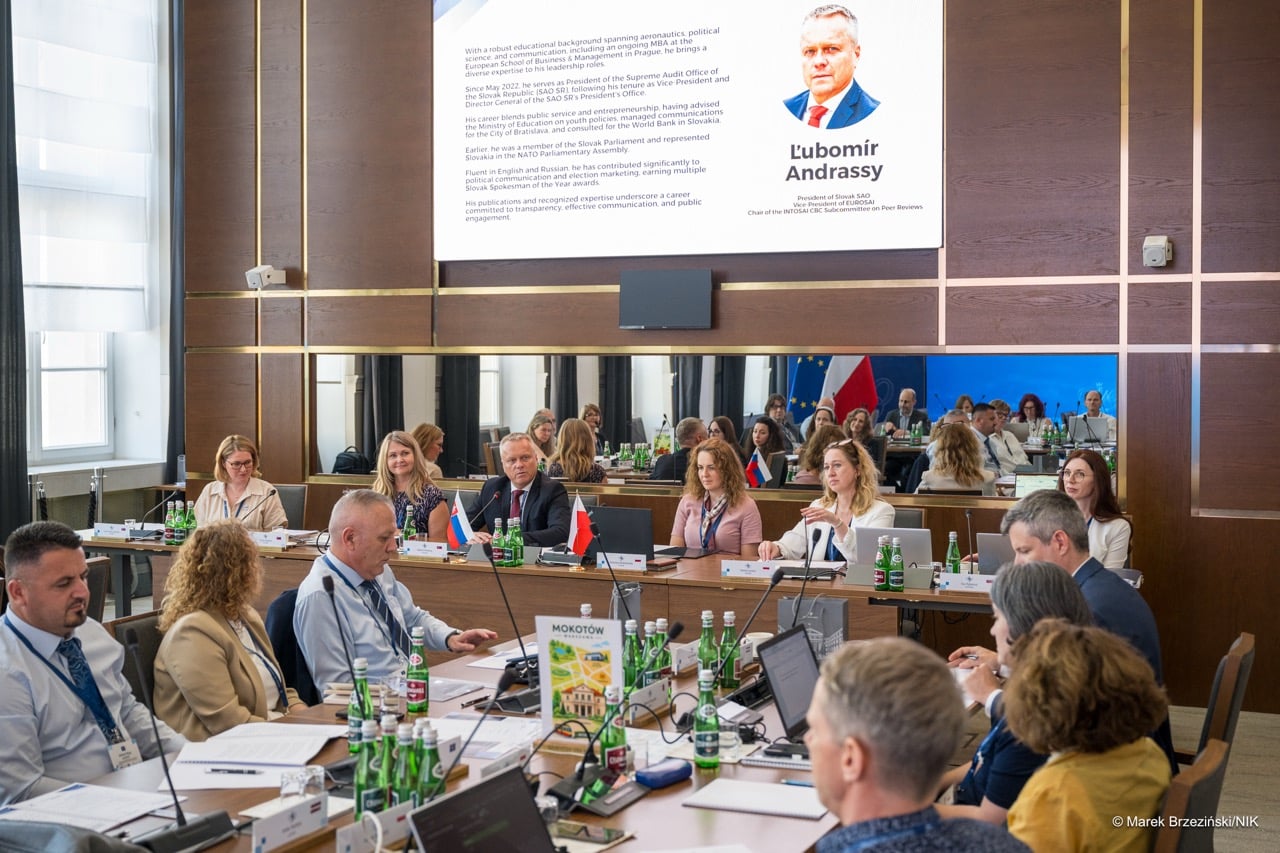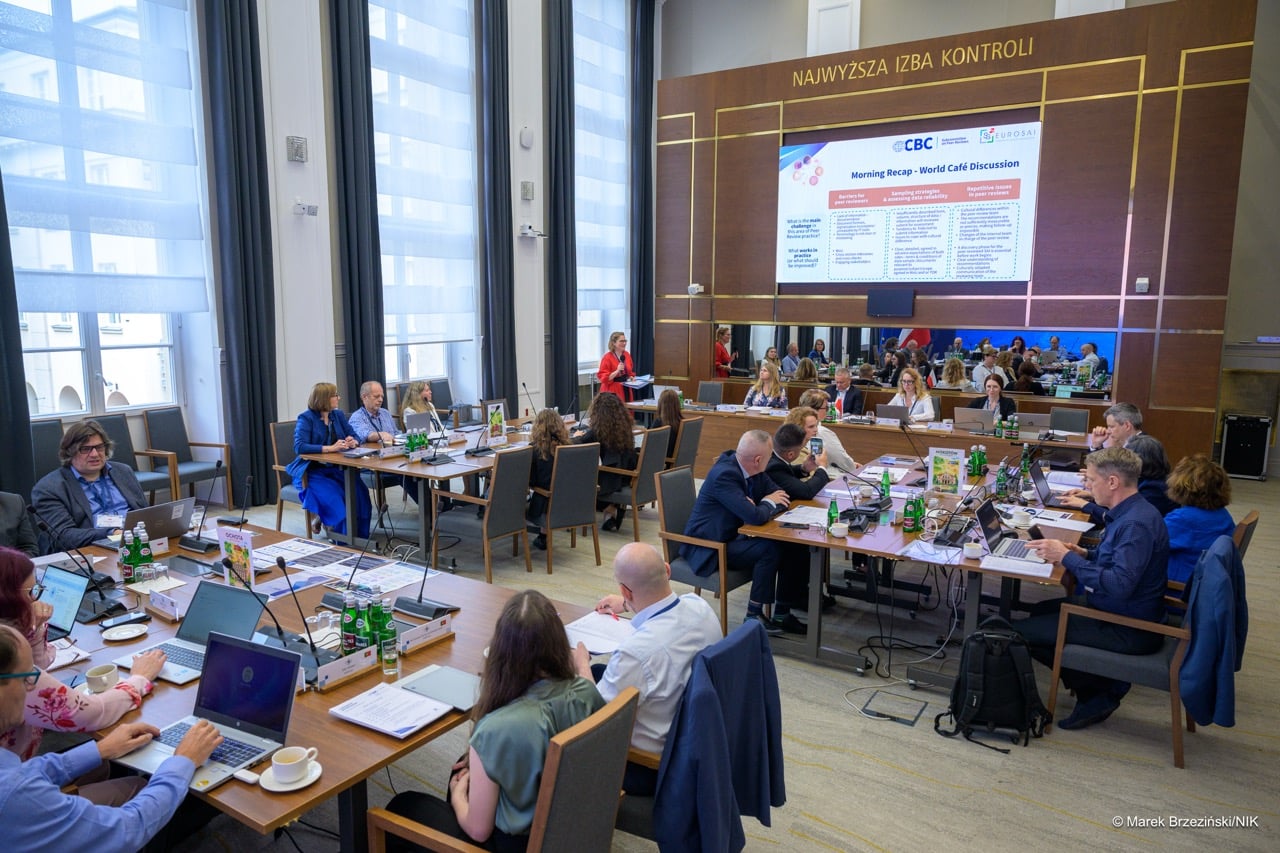
The Thematic Workshop on Peer Review Fieldwork was organized as part of the activities of the CBC Subcommittee on Peer Reviews and EUROSAI Strategic Goal 2. The objective was straightforward: to bring together peer review practitioners and future reviewers to exchange practical experience, discuss recurring challenges encountered during peer reviews, and identify approaches that can improve the quality, consistency and usefulness of peer reviews across Supreme Audit Institutions.
Rather than focusing on theory, the discussions concentrated on real situations encountered during the preparation, execution and reporting phases of peer reviews. Participants repeatedly highlighted that many of the challenges faced by review teams are shared across institutions and regions, regardless of the review topic or organisational context.
What Challenges Did We Discuss?
Throughout the workshop, participants worked together through a combination of expert discussions, panel sessions, World Café exchanges and hands-on collaborative exercises to reflect on issues that regularly complicate peer review work:
- unclear expectations between the reviewed and reviewing SAIs,
- insufficient, incomplete or inconsistent documentation,
- language and communication barriers,
- difficulties accessing and validating evidence,
- challenges related to stakeholder engagement,
- translating evidence into balanced findings and actionable recommendations.
The discussions confirmed that these challenges are rarely methodological in nature. More often, they arise from practical decisions taken during preparation and fieldwork.
What Did We Learn About Preparing a Peer Review?
One of the strongest messages emerging from the workshop was that successful fieldwork starts long before fieldwork itself.
Experts repeatedly emphasised the importance of:
- clearly defining the scope and objectives of the review,
- selecting reviewers with the right expertise and experience,
- agreeing roles, responsibilities and expectations early,
- documenting key arrangements through a clear framework,
- identifying risks before fieldwork begins,
- understanding the legal, institutional and cultural context of the reviewed SAI.
A recurring lesson was that many difficulties encountered later in the process can be prevented through better preparation and clearer communication at the outset.
What Makes Fieldwork Effective?
The workshop discussions showed that the quality of fieldwork depends on the ability to obtain, organise and validate information in a structured manner.
Participants explored practical approaches for:
- managing incomplete or inconsistent documentation,
- creating documentation ecosystems that support transparency and evidence tracking,
- organising information through matrices and structured platforms,
- validating evidence continuously rather than treating validation as a final step,
- engaging stakeholders strategically throughout the review process.
An important lesson emerged: evidence management is not simply about collecting documents. It is about ensuring that conclusions can be traced back to reliable, sufficient and appropriately documented evidence.
Participants also highlighted the importance of stakeholder engagement. Well-designed interviews, careful stakeholder selection and clear communication about the purpose of the review often provide insights that cannot be obtained from documentation alone.
From Evidence to Findings
Another area of focus was the transition from evidence collection to reporting.
The discussions reinforced several practical principles:
- findings should be based on clear criteria and supported by evidence,
- conclusions should be balanced, proportionate and evidence-based,
- recommendations should address underlying causes rather than symptoms,
- reports should recognise strengths as well as areas for improvement,
- communication should remain clear, concise and focused on what matters most.
Participants agreed that a peer review report creates value only when its findings are understood and its recommendations are practical enough to support improvement.
Key Takeaways
The workshop highlighted several practical lessons that can be applied in future peer reviews:
- Strong preparation reduces risks during fieldwork.
- Clear expectations are as important as clear methodology.
- Evidence requires systematic organisation and validation.
- Stakeholder engagement improves understanding and strengthens conclusions.
- Professional judgement remains essential when applying guidance and methodologies.
- Findings and recommendations have impact only when they are evidence-based, understandable and actionable.
Looking Ahead
The workshop confirmed that many peer review challenges are shared across institutions and regions. While contexts differ, participants identified practical approaches that can be applied across peer reviews. To support the transfer of these lessons into practice, the presentations, templates, examples, matrices and other workshop materials are available below or can be downloaded from the Documents section accompanying this summary.
The workshop also served as a starting point for several ongoing initiatives of the CBC Subcommittee on Peer Reviews. Participants were invited to join:
- the project group supporting the revision of GUID 1900, bringing practical peer review experience into the future development of international guidance;
- the project group focused on creating a list of SAIs interested in conducting or participating in peer reviews.
An important conclusion from the workshop was that each of the topics discussed – whether planning and preparation, fieldwork execution, evidence management, stakeholder engagement, communication, reporting or follow-up – is extensive enough to warrant a dedicated seminar or thematic workshop in its own right. The event therefore should be viewed not as the end of the discussion, but as a starting point for deeper exploration of individual peer review topics.
Experienced SAIs are encouraged to build on the discussions initiated in Warsaw and consider organising follow-up thematic events focused on specific areas of peer review practice. The CBC Subcommittee on Peer Reviews would be pleased to support such initiatives, facilitate knowledge sharing and help connect practitioners interested in further developing peer review capacities.
Your feedback matters. Please share your views on the workshop and help us shape future peer review activities and initiatives. – Thematic Workshop on Peer Review Fieldwork Questionnaire

DAY 1 – EUROSAI Peer Review Project Group EUROSAI Presidency Team (SAI Israel)
DAY 1 – Strategic Goal 2 on Institutional Capacity Development (SG2)
DAY 1 – Thematic workshop on Peer Review Fieldwork
DAY 1 – Preparing for the Peer Review Fieldwork
DAY 2 – From fieldwork to findings, through to reporting
DAY 2 – EVIDENCE MANAGEMENT DURING A PEER REVIEW – A few insights
DAY 2 – Fieldwork Execution
DAY 2 – Thematic workshop on Peer Review Fieldwork
*Photos curtesy: ©Marek Brzezinski/NIK