
About IntoSAINT
Vision
- Make IntoSAINT a relevant part of SAI governance
- Position it as a regular integrity check for SAIs
- Support a SAI Integrity culture and leadership
- Contribute to stronger SAI credibility and trust
Revised Strategic Direction
- The Supreme Audit Institution (SAI) of Norway has taken over the leadership of the CBC IntoSAINT workstream from the SAI of Mexico, and previously from the Netherlands Court of Auditors. Building on this strong foundation, NAO Norway seeks to further develop IntoSAINT as both a capacity-building instrument and an integrity assessment tool that supports SAIs in leading by example.
- IntoSAINT plays a critical role in operationalising key INTOSAI principles, particularly ISSAI-P 12 (The Value and Benefits of SAIs) and ISSAI-P 20 (Principles of Transparency and Accountability). It translates these high-level principles into practical, organisation-specific reflection on what it means for a SAI to demonstrate integrity, transparency, and accountability in its daily operations.
- A core ambition is to strengthen IntoSAINT as a tool for organisational development, enabling SAIs to address not only formal systems and controls, but also the more complex and often less visible dimensions of integrity. These include organisational norms, behaviours, informal practices, and internal cultures—factors that are highly influential but not easily documented, measured, or benchmarked.
- Moving forward, we will emphasise on:
- High-quality facilitation, with well-trained moderators capable of guiding sensitive discussions
- Contextual adaptation, recognising cultural and organisational differences across regions
- Professional and safe dialogue spaces, where participants feel able to speak openly
- We do not assume that IntoSAINT can or should be rapidly rolled out at scale across all regions. Rather, we aim to build a sustainable culture over time, where SAIs increasingly see the value of systematic organisational self- reflection as part of their professional development/obligations.
IntoSAINT offers a mirror for organizational reflection
IntoSAINT provides a structured platform to surface and discuss issues that are often difficult to articulate or address, such as how:
- formal rules relate to everyday practice
- influence and decision-making work in practice
- responsibility and accountability are actually exercised
- openness and speaking up function inside the organisation
- the organisation responds to concerns and warning signs
By bringing such topics into open and constructive dialogue, IntoSAINT helps SAIs recognise and address integrity risks that might otherwise remain hidden, thereby strengthening their credibility and institutional resilience.
At the same time, we acknowledge that these conversations can be challenging and sensitive. Addressing these issues requires trust, professionalism, and cultural awareness.
Next steps for IntoSAINT
- Promote broader recognition of IntoSAINT as a strategic tool for institutional development
- Support SAIs in integrating IntoSAINT into their core operations
- Develop a strong international moderator network
- Encourage more SAIs to have IntoSAINT asssessments conducted
- Encourage more open discussion of integrity risks and organisational challenges
- Document and share common challenges, lessons learned and good practices, while recognising that many aspects of integrity cannot be standardised or benchmarked
- Foster synergies with ISSAI frameworks and related initiatives, while maintaining IntoSAINT’s unique focus on organisational culture and integrity
Documents
IntoSAINT Handbook 2026
Facilitaor’s Guide 2026 (incl toolbox)
The IntoSAINT Tool
IntoSAINT: a tool to assess the organizational integrity of Supreme Audit Institutions
The concept of organizational integrity
An organization with high organizational integrity performs in line with its core values and achieves its goals in a transparent, accountable, and resourceefficient manner.
IntoSAINT adopts a comprehensive understanding of integrity, informed by international standards and academic research. Organizational integrity, as defined by IntoSAINT, refers to an organization’s ability to carry out its tasks in accordance with its core values, while achieving its objectives in a transparent, accountable, and resource-efficient manner. It is not simply the sum of individual ethical behaviours, but a systemic quality shaped by the organization’s culture, leadership, and
institutional frameworks.
Integrity is not a standalone task; it is a systemic responsibility that must be embedded throughout the organization. This means that integrity should be reflected in leadership behaviour, integrated into daily operations, and supported by both formal controls and informal cultural norms.
The IntoSAINT tool – how it works
- A two-day facilitated self-assessment workshop
- Involves 15–20 carefully selected staff across the organization
- Led by trained, neutral moderators
- Combines anonymous questionnaires and structured dialogue
- Results in a confidential management report with key insights
Prevention: Its not about pointing fingers but pointing the way forward.
IntoSAINT brings together a diverse group of staff from across the organization- representing different roles, levels, genders, and lengths of service—to identify integrity vulnerabilities within the institution’s structures, systems, and culture.
The premise is that staff are best placed to recognize the organization’s vulnerabilities and assess specific integrity challenges. The focus is on identifying weaknesses that may hinder the institution’s ability to uphold its core values.
IntoSAINT offers a structured, collective reflection on how the organization functions and where improvements are needed. While the workshop may result in recommendations for improving integrity management, its core value lies in helping the organization identify potential vulnerabilities, raise awareness, and develop a shared understanding of key integrity issues.
Why IntoSAINT matters for SAIs
- SAIs are expected to lead by example
International standards emphasise that SAIs should demonstrate good governance in their own organisations. How we are governed and managed internally is part of our professional responsibility. - Internal conditions affect what we deliver
The way an organisation actually works influences independence, professional judgement, and the quality of audits. IntoSAINT helps examine and understand these internal dynamics. - Many risks arise internally, often influenced by external pressures
Governance risks typically emerge in daily routines and practices, but are often shaped by expectations and pressure from outside the organisation. They are usually known internally, yet rarely discussed openly. IntoSAINT helps make these risks visible. - Risks grow if they are not addressed
When challenges are ignored, they do not disappear. Instead, they become part of normal practice—making them harder to recognise and change over time. - IntoSAINT is cost-effective
The approach requires limited time and resources, builds on the organisation’s own experience through structured workshop discussions, and is supported by professional peers from the SAI community. - The cost of inaction is high
Loss of trust, criticism, and reputational damage are far more difficult to address than early reflection and timely adjustments.
Get In Touch With IntoSAINT
Contact Jorild or Gry using the following email address:
News

Getting connected: ACCC workstream launches new infographic
Most of us have been able to keep functioning effectively during Covid because we are connected to an electronic world. A world which, from the comfort of our homes, has allowed many of us to send messages, hold virtual meetings, and access documents from many...
AFROSAI-E Bulletin no. 11 now available
Please find below the AFROSAI-E Bulletin no. 11, where you will find topics such as the upcoming AFROSAI-E Technical Conference 3-5 November (register now!); The PFM Reporting Framework v2.0 - and the audit of SDG implementation; The AFROSAI-E Institutional Capacity...
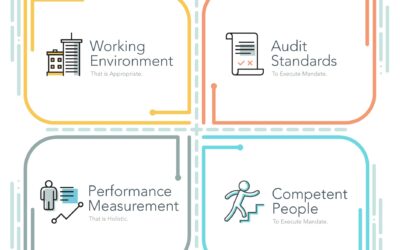
PASAI blog: Human resources a vital pillar of professional SAIs
SAI’s capacity to deliver value and benefits SAIs must have a capable and motivated workforce to deliver value and benefits to the lives of citizens through effective and impactful audits. Having competent people to deliver the SAI’s mandate is a critical...

Online seminar: “Getting Ready for a Peer Review”
The CBC Subcommittee on Peer review and SAI Slovakia hereby welcomes members of the INTOSAI community to the online seminar “Getting Ready for a Peer Review”. The seminar is taking place on November 10, 2021, 13:00-15:30 UTC/GMT and will be held in English only. The...

Updated ACCC Good stories: Using Strategic Planning to Build Partnerships
In 2018 the two SAIs of Niger and Madagascar embarked on a process to prepare new strategic plans, and seek out support for their successful implementation. Knowing this would not be easy considering human and financial resources and the need to galvanize greater...

Open for comments: Pronouncements on Auditor Competence
The expectations of the INTOSAI community regarding the development of professional pronouncements on auditor competence is reflected in the INTOSAI strategic plan for the period 2017 to 2022, assigning the following responsibility to the INTOSAI Capacity Building...

CBC blogspot: Auditor competence and development pathways
By Jane Meade, Group Executive Director, Australian National Audit Office Throughout my career as an auditor, trainer, and technical specialist I have had a particular passion for learning and development. During the application process to join the Forum for INTOSAI...

Documentation from CBC steering committee meeting now available
Close to 100 participants joined the CBC steering committee 2021 where the subcommittees and workstreams had handed in their progress reports and work plans in advance for the steering committee's approval, as had the draft agenda, draft minutes 2020, the CBC budget...

AFROSAI-E Bulletin 10 now available
In the latest issue of the AFROSAI-E Bulletin you will find topics such as the dramatic economic, cultural and social transformations brought about by the COVID-19 pandemic and how it has forced us to rethink the way we work as SAIs. This will be on the AFROSAI-E...
14th INTOSAI-Donor Cooperation Steering Committee Meeting 2021
IDI Global Foundations Unit invites INTOSAI-Donor Cooperation members and observers to next week’s IDC Steering Committee meeting and encourages you to register at https://evolve.eventoptions.co.za/register/intosai2021?p=5291b5c0-0ae7-11ec-bdfe-57f1644e7e86 as soon as...